
Titanic (1997)
Many films are good. Some are influential. But only one is Titanic.

Everyone knows Titanic. It’s the box-office phenomenon that broke every record in the book, raking in more than $2.2bn and sweeping up 11 Academy Awards, including Best Picture. James Cameron’s mega-hit has comfortably cemented itself as one of the world’s most beloved and acclaimed films. But how does it hold up 25 years on?
Rose DeWitt Bukater (Kate Winslet) is being forced into an engagement with an uptight tycoon when she meets Jack Dawson (Leonardo DiCaprio), a spirited steerage passenger aboard Titanic. Their romance blooms against the backdrop of the voyage, but when the ship collides with an iceberg in the frigid North Atlantic, the young lovers’ journey is transformed into a breathtaking race for survival.
And breathtaking truly is the word.
Titanic is a film of two halves. In the first, we revel in the ship’s majestic voyage and the couple’s blossoming romance. The second plunges us into the harrowing chaos and heartbreak of its sinking.
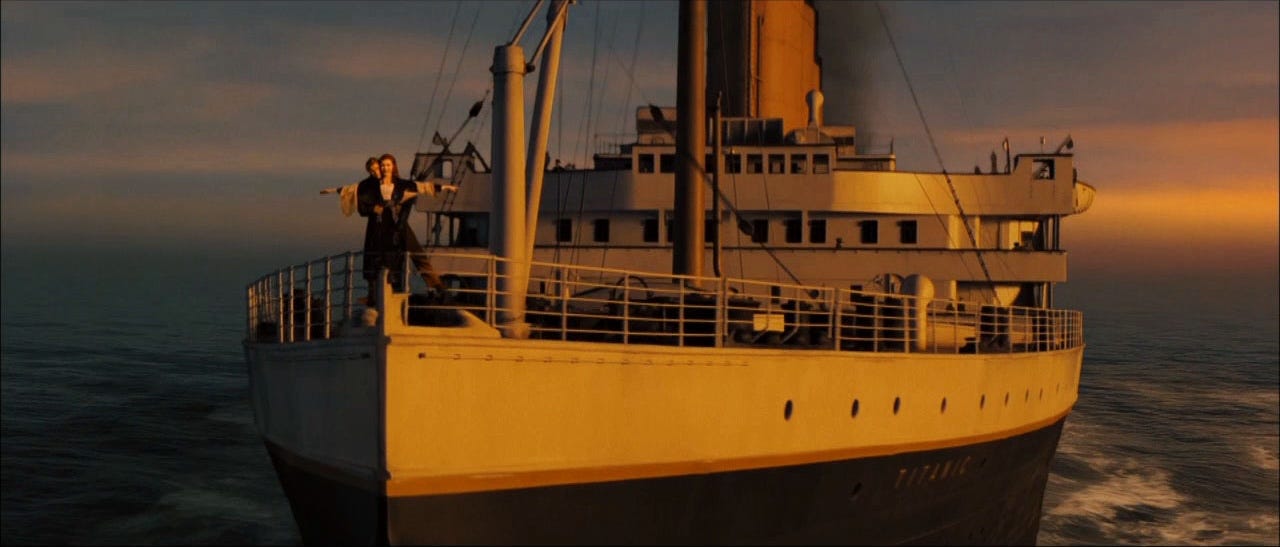
For the first 90 minutes, Cameron masterfully captures the magnificence and luxury of Titanic. The camera sweeps across the ship, from its towering bow to the grand stern, celebrating the opulence and ambitious engineering. Of course, this makes it all the more painful when she is torn to pieces an hour later.
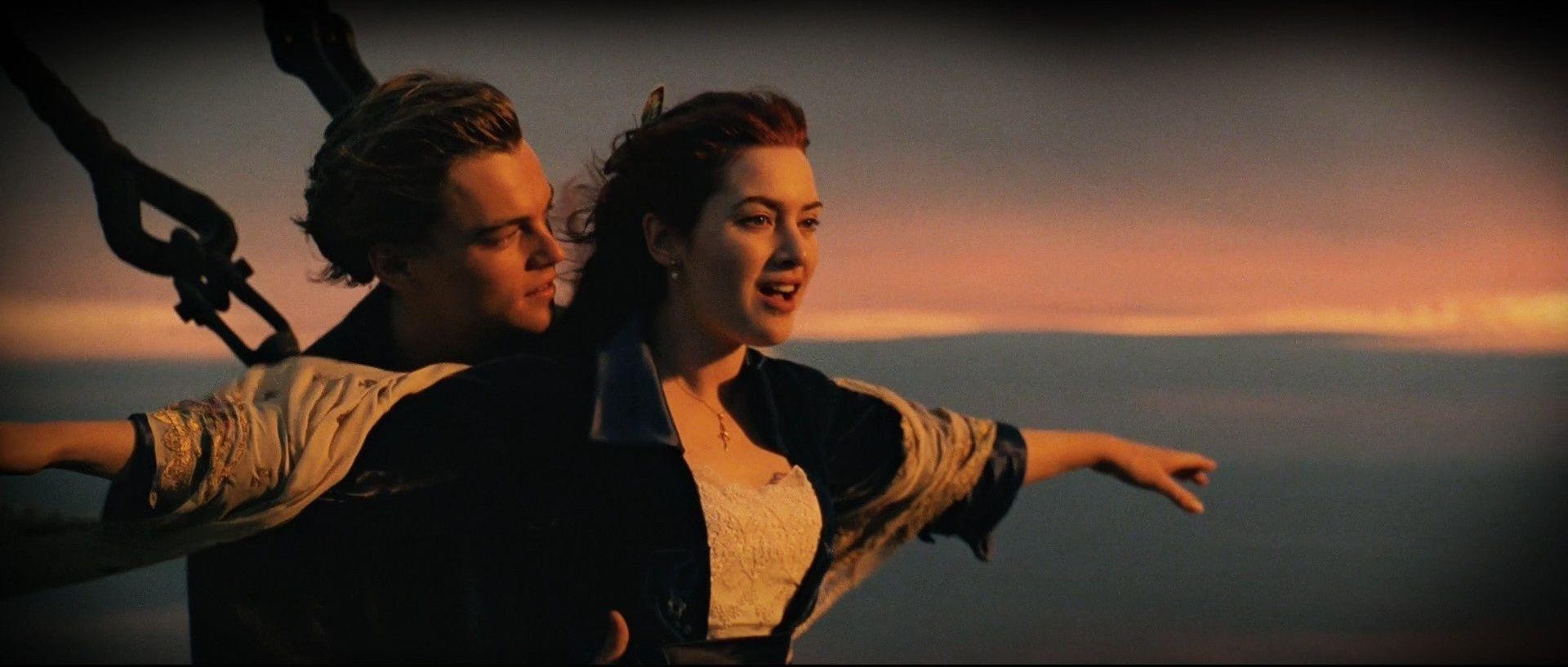
One scene that bridges the gap between the two halves stands out. Not just in the film, but as one of the greatest scenes in film history. Set against the backdrop of a breathtaking copper sunset, the vast, unending Atlantic Ocean unrolls below us as Rose closes her eyes and steps up to the railing. Positioned at the ship’s iconic bow, Jack gently wraps his hands around Rose’s waist. He slowly extends her arms wide, embracing the rushing wind now whistling past us. “Alright, open your eyes,” Jack whispers. Rose gasps. There is nothing in front of her – or us – but the ocean and breathtaking skyline. “I’m flying!” she exclaims. James Horner’s extraordinary score swells to an emotional climax as we fly across the Atlantic with the lovers.
It is a masterstroke of filmmaking – a flawless (yes, flawless), ephemeral moment of liberation and connection between the two characters.
Cameron’s attention to detail in these smaller, human moments and the performances from DiCaprio and Winslet are deeply affecting from start to end.
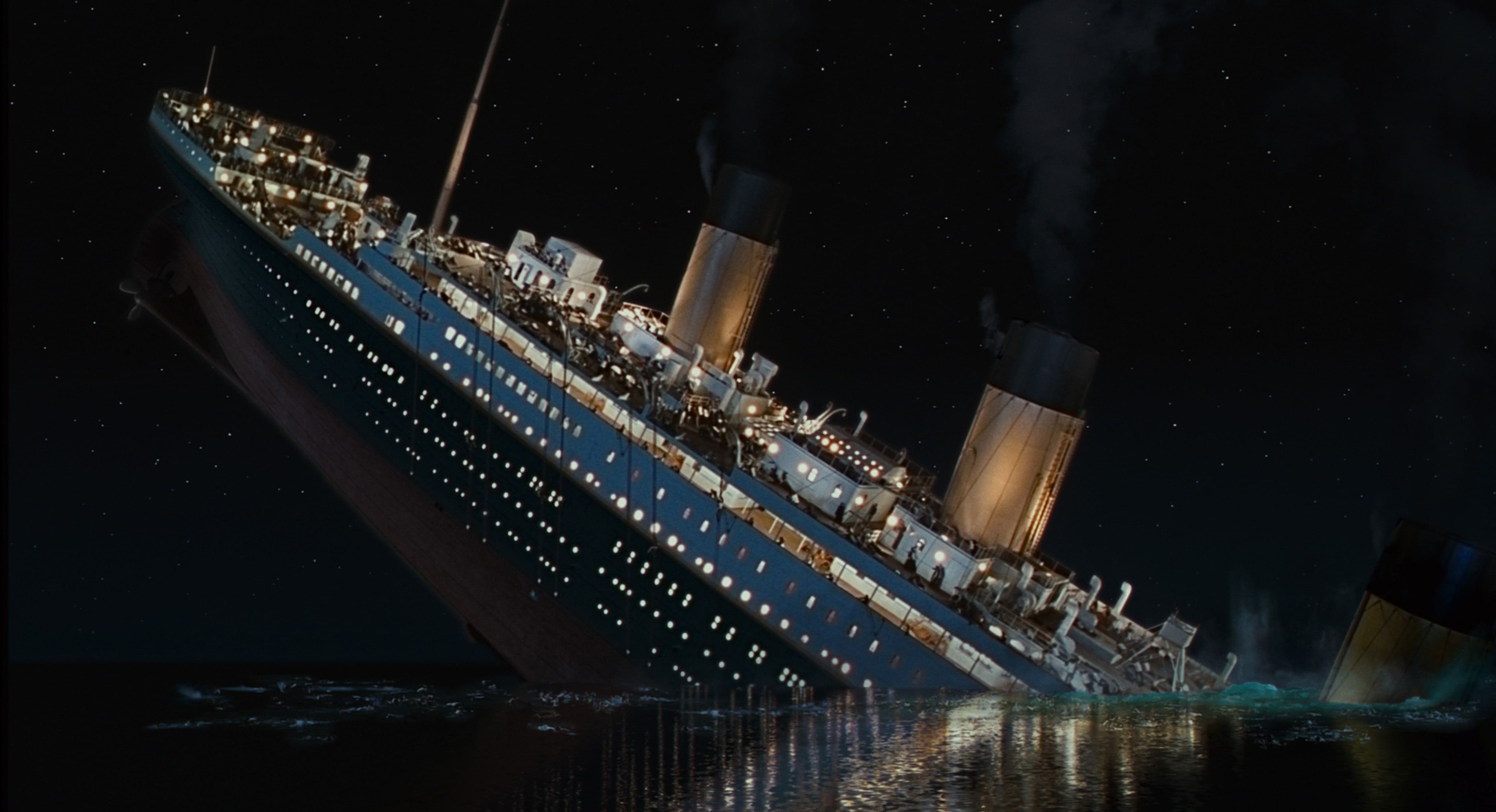
But, no matter how hard you hope, the ship still meets her fate, and the tension escalates to uncontrollable, heart-thumping levels. The rivets pop, water bursts through bulkheads, and the ship’s stern rises faster and faster, higher and higher.
Elsewhere, the orchestra plays ‘Nearer My God to Thee,’ families are torn apart, and lifeboats are lowered.
It is in these moments that Cameron achieves a vision so grand, so haunting, and so striking that it’s not just impossible to catch your breath, but difficult to keep up.
Every scene for the final hour pulsates with vivid reality and visceral horror, offering no respite. Its relentlessness delivers a mega-scale studio epic with the heart of a romance and the pulse of an action movie.
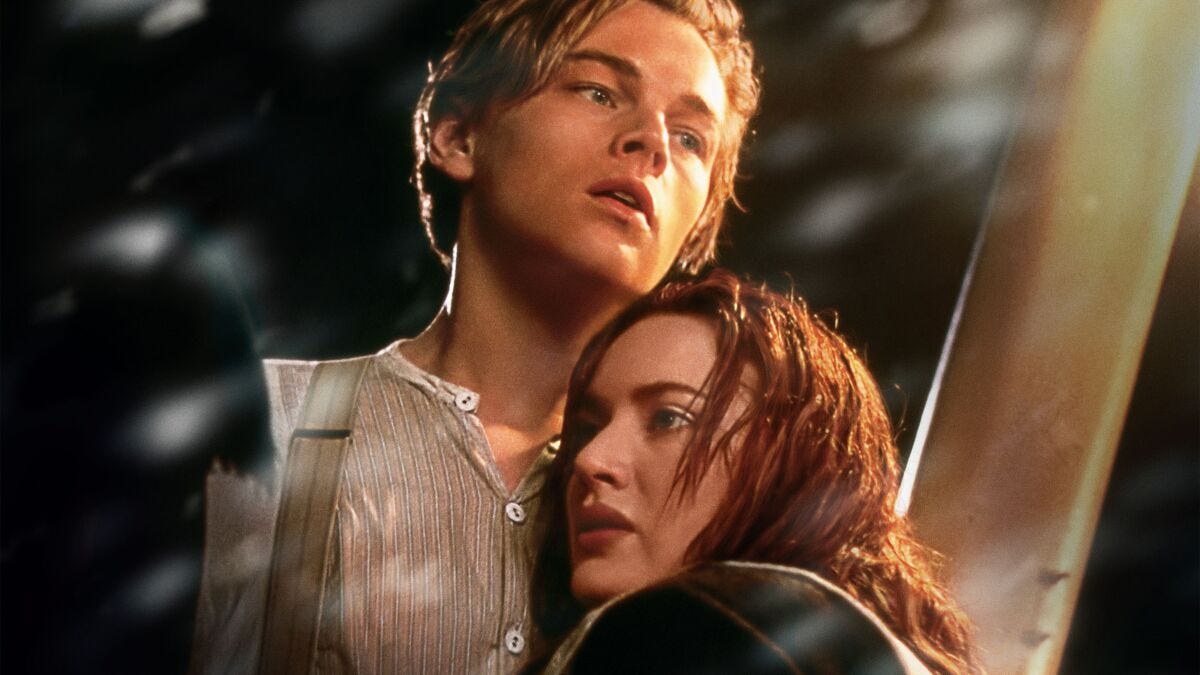
Balancing historical spectacle with personal stories, the film masterfully integrates technical wizardry to recreate Titanic’s grandeur and tragic end. It captures the human dimensions of the catastrophe, focusing on poignant decisions made as the plunges under the surface. The experience is not only a visual marvel but an emotionally resonant journey.
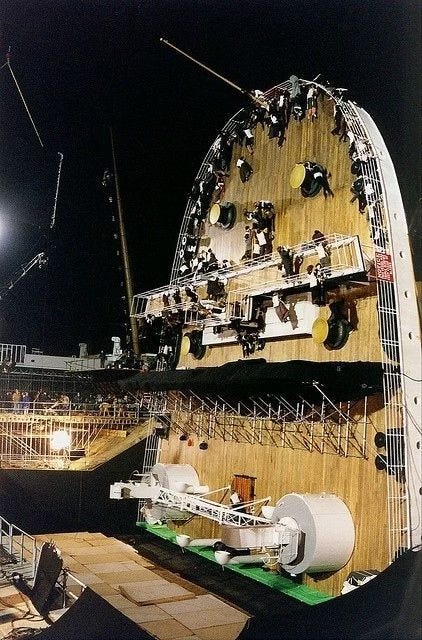
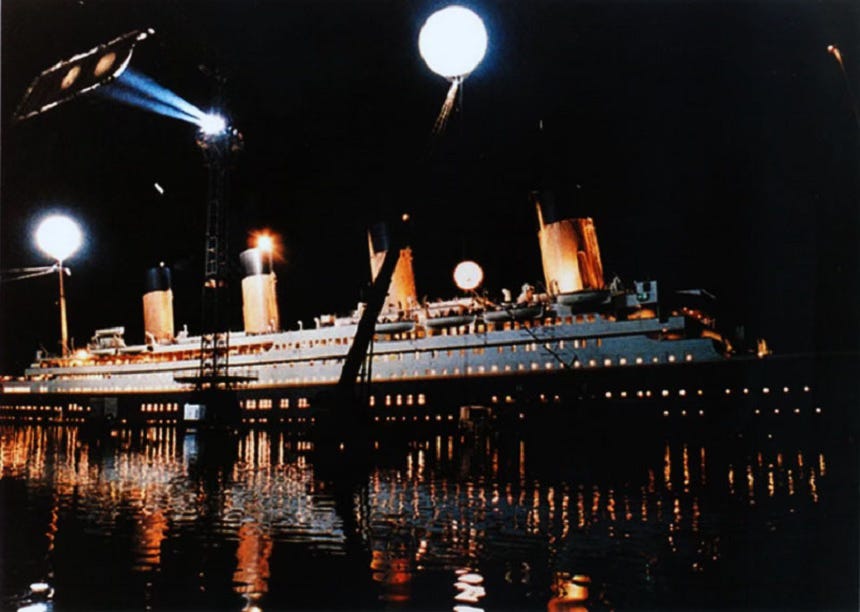
Cameron utilises various special effects, from miniatures and green screens to water tanks and cranes. It was then and remains now a massive undertaking that paid off beyond anyone’s imagination. And the result is a film that looks better than any modern blockbuster I can think of.
Sadly, the forces that came together to make Titanic simply don’t exist anymore. Titanic endures, in part, because of its craftsmanship. Cameron’s larger-than-life ambitions as a filmmaker and his innovative work with sets and special effects not only broke new ground technically but were carefully deployed as and when needed.
That’s partly why Titanic has never gone away, not really. Titanic is so much and so many things to so many people – a visceral disaster, an engrossing and heart-wrenching romance, a historical epic, a nostalgic throwback, a technological marvel, a filmmaker’s manual.
But ultimately, it is a testament to proper, big-screen filmmaking.
No film has ever come close to the grip Titanic has on the world. It continues to move us generationally, with depth and appeal so vast that its ability to endure nearly three decades on seems unstoppable.
It has embedded itself in popular culture so deeply that it is routinely referenced and spoofed in hundreds of films, TV shows, books, and songs. From Rugrats to Gilmore Girls and The Simpsons to more recent works, Titanic is filled with iconography that has never faded. Think about it; has any film before or since churned out as many classic moments as James Cameron’s Titanic?
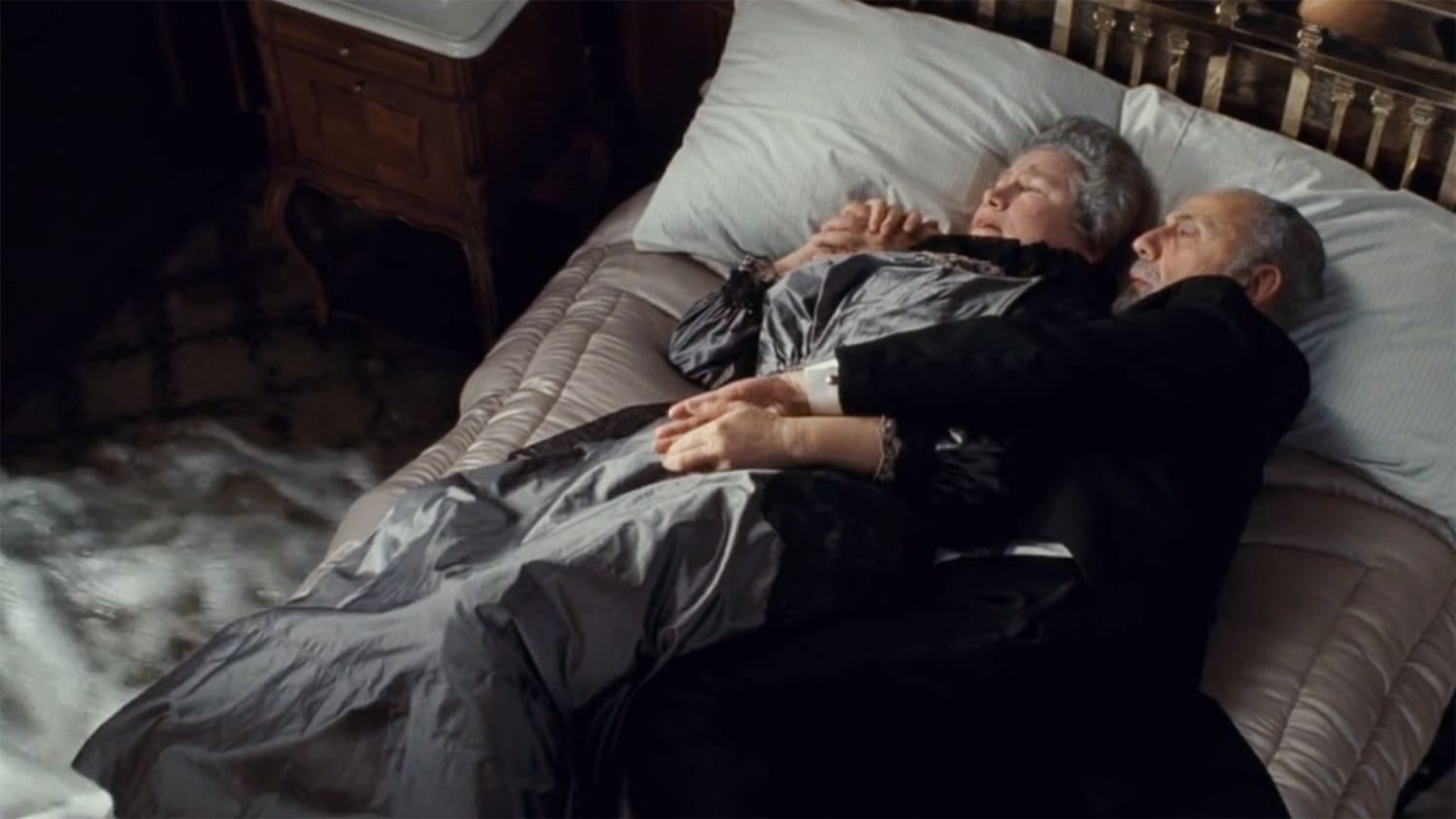
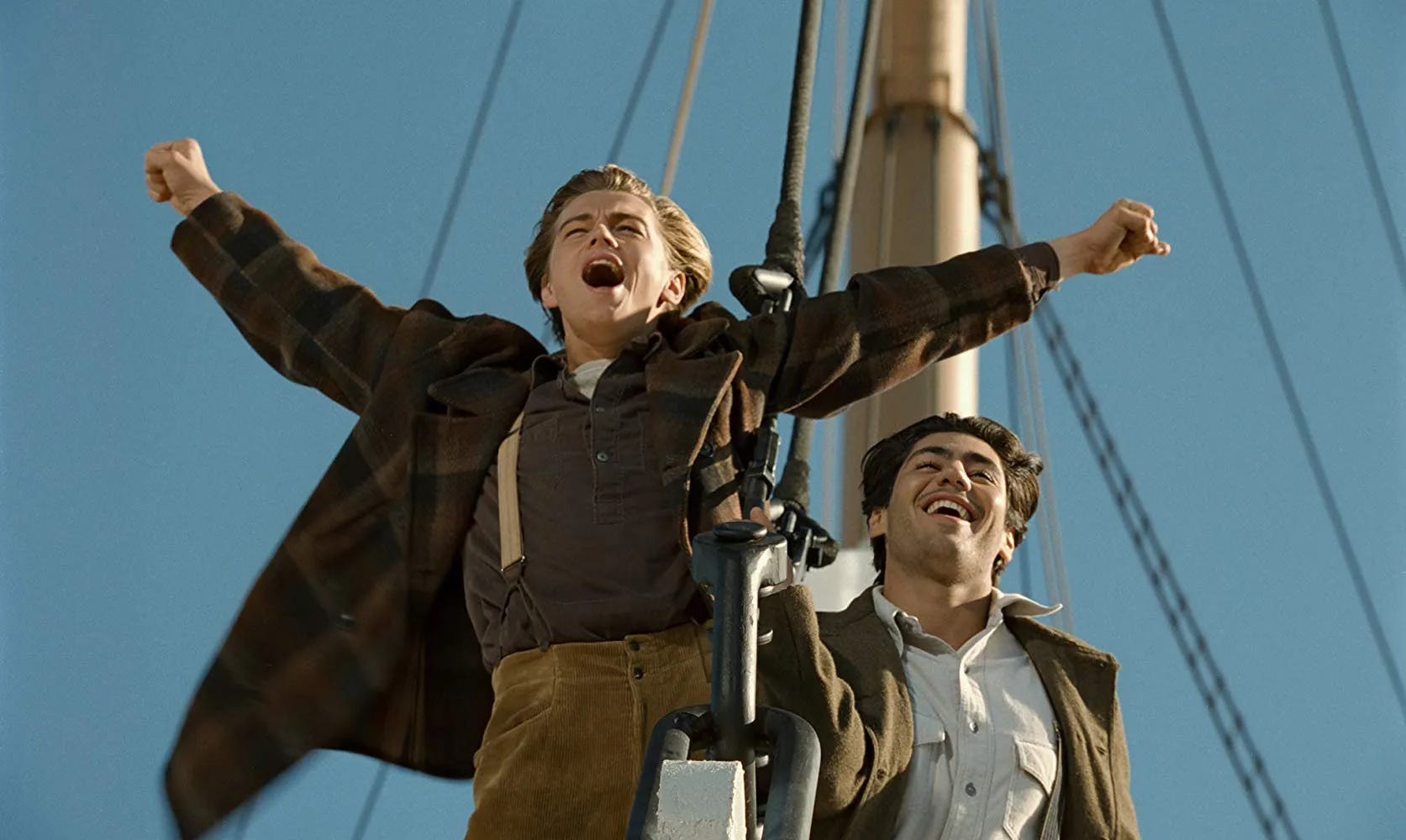
“I’m the king of the world!”; Rose’s arms flung wide with the wind in her hair as she ‘flies’ on the bow of the mighty ship; the old couple cuddling tenderly in their cabin bed, knowing they will die; the steamy handprint on the car window; a maniacal Billy Zane as Cal chasing Jack and Rose with a gun; Rose jumping back onto Titanic as it’s sinking; the gnawing terror of the working-class families stuck behind bars as the water rises; the dropped key!
The film is bursting with iconic scenes and images anyone would recognise immediately.
In a world cluttered with mediocre films and uninspired TV series, the enduring appeal of Titanic more than 25 years later is a testament to the sheer spectacle and masterful storytelling of James Cameron. It stands as the pinnacle – the highest of high – of Hollywood storytelling: impeccably produced, intelligently structured, and undeniably captivating. The plot may adhere to traditional film formulas, but its execution is anything but.
Nothing on earth rivals the breathtaking spectacle and magnificent grandeur of James Cameron’s timeless masterpiece. More sweeping than the sea itself, Titanic has undeniably triumphed as one of the greatest films of all time.
★★★★★